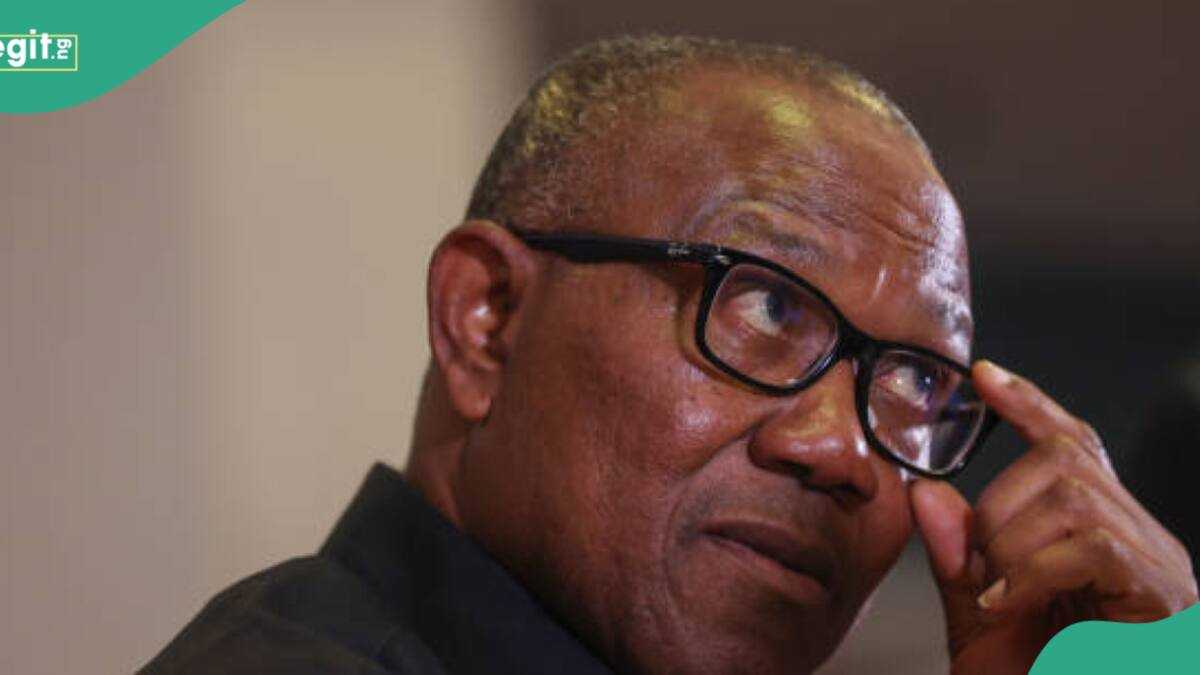
Peter Obi turned 65 on Sunday, 19 July. He has held high office, run two presidential campaigns and accumulated a record that Nigerians continue to argue about fiercely. Now a communications strategist has offered his own assessment — and his conclusion cuts to something deeper than electoral arithmetic.
Kalu Okoronkwo, a leadership advocate and communications professional, argues that Obi’s most significant contribution to Nigerian public life is not any office he has occupied. It is the standard of expectation he has forced into the national conversation. That is a bold claim, and it deserves scrutiny.
Okoronkwo shared his analysis in an opinion piece timed to mark Obi’s birthday. The former Anambra governor is currently the Labour Party’s most prominent national figure and has since declared his 2027 presidential ambition under the Nigeria Democratic Congress. His political journey, Okoronkwo argues, has fundamentally altered what millions of Nigerians feel entitled to demand from anyone seeking their vote.
“He has compelled millions of Nigerians to rethink what leadership should demand and, perhaps more importantly, what citizens should demand from their leaders,” Okoronkwo wrote. That is not a trivial shift. In a political culture long dominated by patronage and personality cults, raising the baseline expectation matters.
On Obi’s gubernatorial record in Anambra, Okoronkwo points to fiscal discipline, debt reduction, investment in education and healthcare, and the much-cited fact that Obi left office with substantial financial reserves. Supporters treat this as proof of prudent stewardship. Critics ask whether caution became an obstacle to bolder infrastructure investment. Both positions have evidence behind them, and Okoronkwo does not pretend otherwise.
The strategist also credits Obi with shifting public debate away from vague campaign promises towards harder questions: value for money, responsible budgeting, and where public funds actually go. Obi’s personal habits — travelling without extravagant convoys, speaking openly against wasteful government spending — have reinforced that image consistently. Whether one reads that as genuine conviction or calculated symbolism depends largely on where one already stands politically.
Okoronkwo is candid about the criticisms. Some analysts believe Obi’s cautious, managerial instincts are poorly suited to the brutal compromises of national politics. Others dismiss his frugal public persona as performance rather than governance philosophy. These are legitimate challenges, not mere partisan sniping. Okoronkwo’s response is measured: every consequential political figure attracts both admiration and scrutiny, and what separates statesmen from ordinary politicians is their ability to reshape public expectations long after the campaign slogans have faded.
To illustrate the type of leader he has in mind, Okoronkwo draws comparisons with Singapore’s founding Prime Minister Lee Kuan Yew, former Uruguayan President José Mujica, former German Chancellor Angela Merkel, and Nelson Mandela. The thread connecting them, he argues, is integrity, humility and the capacity to earn genuine public trust rather than merely purchase it. Whether Obi belongs in that company is a question Nigerians will answer over time, not commentators today.
The broader questions Okoronkwo identifies are worth stating plainly. Can integrity become a genuine electoral advantage in Nigeria? Can fiscal prudence coexist with transformational governance, or does one always strangle the other? Can competence displace patronage as the primary currency of political advancement? These are not abstract philosophical puzzles. They are the live fault lines running through every Nigerian election cycle.
Okoronkwo’s verdict is clear-eyed without being starry-eyed. Obi’s place in history remains unwritten. His most enduring legacy, the strategist suggests, may lie not in any office won or lost, but in the political vocabulary he has helped rehabilitate: prudence over extravagance, accountability over opacity, character over convenience, public service over personal privilege. Whether Nigeria ultimately acts on that vocabulary is, of course, a separate matter entirely.
Separately, Obi has kept up his criticism of the current administration. He recently claimed that Nigerians who voted for President Bola Tinubu in 2023 have since lost their businesses to economic hardship and are now struggling to survive — pointing to worsening poverty, hunger and insecurity as evidence that the country’s economic difficulties have deepened rather than eased under the present government.