
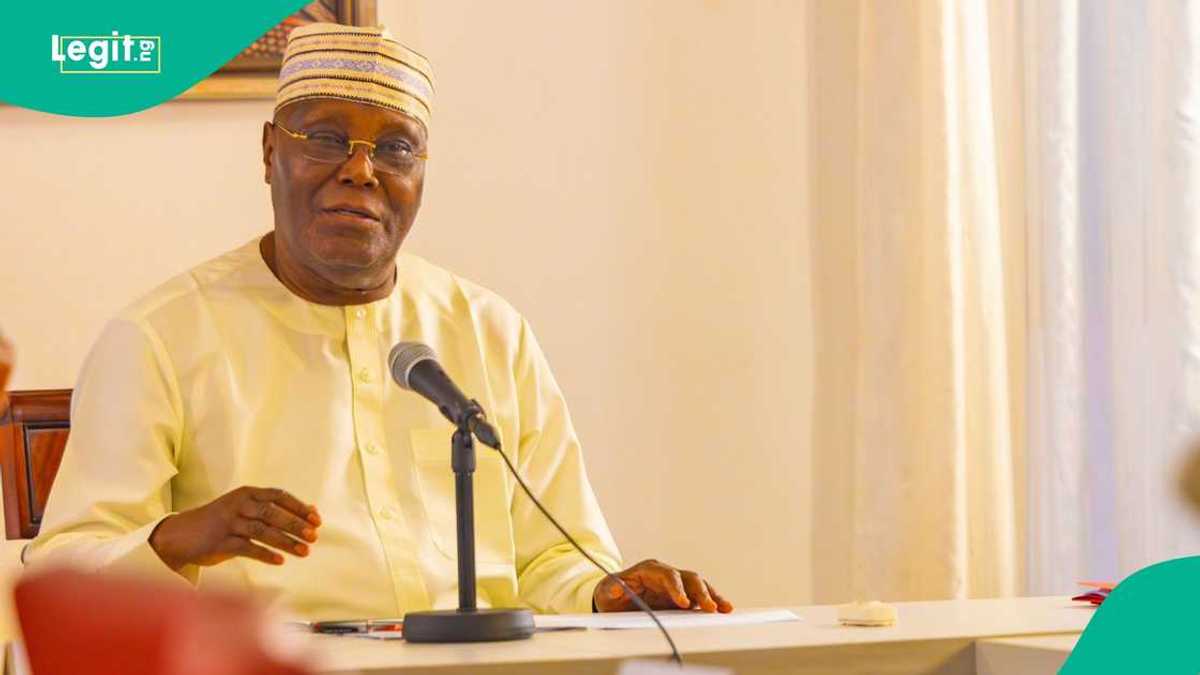
Atiku Abubakar, the African Democratic Congress presidential candidate and former Vice President, has launched a sharp attack on the Tinubu administration over petrol prices that have now reached ₦1,470 per litre, demanding a comprehensive public account of every naira saved or earned from oil revenues and Federation Account deductions since the fuel subsidy was removed in 2023.
The demand, issued through Atiku’s Senior Special Assistant on Public Communication, Phrank Shaibu, on Monday, 14 September 2026, arrives nearly three and a half years after the federal government scrapped the petrol subsidy — a decision it sold to Nigerians as a necessary sacrifice that would unlock funds for education, healthcare and infrastructure. Those promises, Atiku argues, have gone conspicuously unfulfilled.
“Petrol at ₦1,470 per litre is not merely a figure at the filling station,” Atiku said in the statement. “It enters the price of transportation, food, school runs, farming, manufacturing and virtually everything Nigerians buy. Every increase at the pump travels directly into the household budget.”
Atiku anchored his accusations in official figures from the Federation Accounts Allocation Committee. The FAAC data for June 2025 showed gross Federation Account revenue of ₦4.232 trillion, yet only ₦1.818 trillion was distributed to the three tiers of government. The remainder was absorbed under headings including cost of collection, transfers, interventions, refunds and savings — categories Atiku says demand line-by-line explanation. He called for a detailed reconciliation of every deduction made before distribution, the statutory authority behind each one, and the identities of the accounts that received the funds.
His demands extended beyond FAAC arithmetic. Atiku called for public disclosure on the Renewed Hope Infrastructure Development Fund, OML 143, the NNPC’s LNG trading operations and what he described as offshore corporate structures linked to the oil sector. He also cited allegations concerning unofficial crude lifting and maritime surveillance contracts, insisting these matters are too grave to be dismissed with press statements.
The former Vice President was particularly pointed in rejecting the argument that global oil prices explain Nigeria’s current predicament. In 2008, when crude peaked at approximately $147 per barrel — nearly fifty per cent higher than today’s figure of around $102.52 — Nigerians paid just ₦65 per litre under the Yar’Adua administration. Today’s pump price is more than twenty times that. The numbers do not support the government’s narrative, and Atiku said so plainly.
He also drew a comparison with the United States, where petrol costs roughly $4.31 per gallon — approximately $1.14 per litre — backed by a federal minimum wage of $7.25 per hour. Nigeria’s minimum wage stands at ₦70,000 per month. “Tinubu has brought Nigerians close to American fuel prices while leaving them with Nigerian poverty wages,” Atiku said. “That is the true cost of his subsidy-removal policy.”
He closed with a direct challenge to the presidency: “After all the oil, all the revenue, all the deductions and all the hardship, petrol is now ₦1,470 per litre. The question Tinubu must answer is simple: where are the savings, where are the revenues, and who is taking Nigeria’s money?” The administration has not yet issued a formal response to the statement.