
Early on Tuesday morning, before most Lagos motorists had joined the familiar queue at their nearest filling station, something was already moving against them. Depot operators across Nigeria had begun adjusting their rates upward, responding to a crude oil market that is tightening by the day and a critical shipping route that remains far from normal. The numbers may look technical, but their consequences are entirely practical.
As of 6:29 a.m. WAT on Tuesday, 11 August 2026, Brent crude was trading at $88.04 per barrel, up 0.36% on the day, while West Texas Intermediate rose 0.45% to $82.50. Murban crude recorded a sharper jump, climbing 5.79% to $84.90 per barrel. With Brent now within striking distance of the psychologically significant $90 mark, traders and energy analysts are watching developments closely.
The immediate cause of the latest pressure is the Strait of Hormuz, through which a substantial share of the world’s crude oil and refined products normally flows. Traffic through the waterway remains severely disrupted, keeping global energy markets unsettled. Reports suggest that Iran and Oman may be edging toward an arrangement that could support the resumption of vessel movements, but shipping activity has not yet returned to normal. Until it does, tanker availability, freight costs and energy inventories will all remain under strain.
The effects are already registering in Nigeria’s fuel supply chain. Data from PetroleumPriceNG showed depot petrol prices rising by nearly 3% on Tuesday, with several operators moving their rates higher in a single morning. Soroman recorded one of the largest increases, adding N50 to bring its price to N1,250 per litre. Nepal adjusted upward by N20 to N1,230 per litre, while Liquid Bulk raised its rate by N35 to N1,225 per litre. SOBAZ added N40 to sell at N1,220 per litre. Pivot was the solitary exception among listed operators, holding at N1,180 per litre — the only depot still trading below the N1,200 threshold.
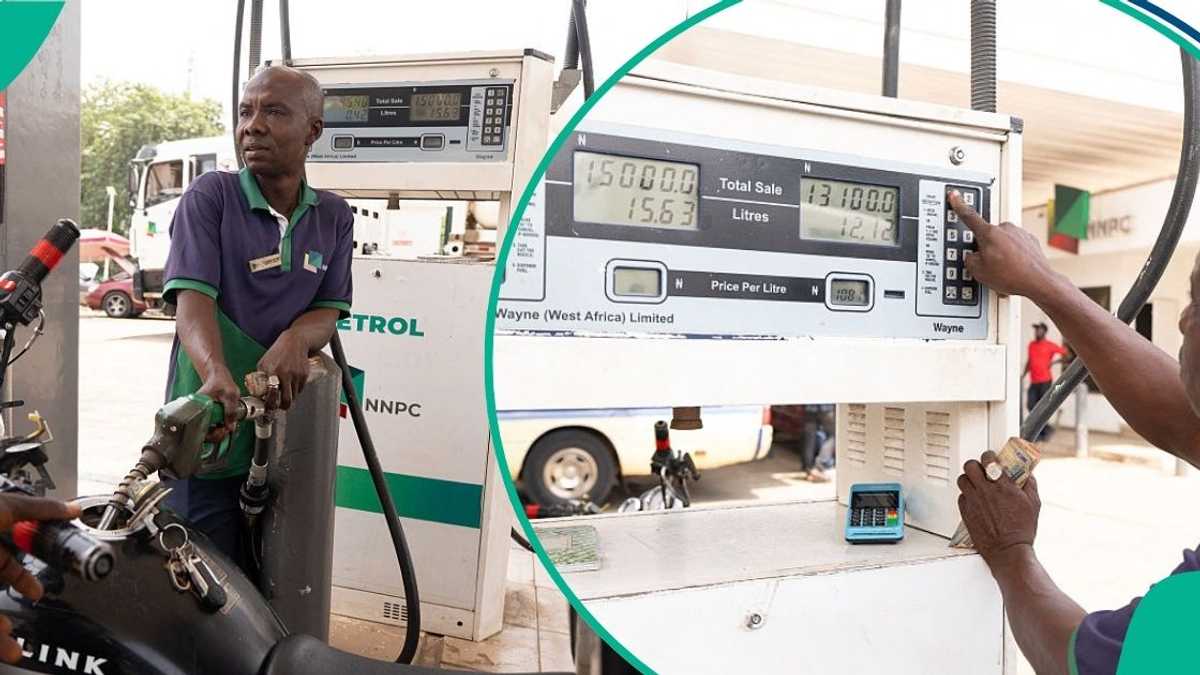
At the retail level, major filling stations across the country, including MRS outlets backed by the Dangote Refinery, have been selling petrol at between roughly N1,240 and N1,260 per litre. The gap between depot costs and pump prices is already narrow, which means any sustained rise at the depot level is likely to feed quickly into what ordinary Nigerians pay at the forecourt.
Energy policy expert Adeola Yusuf put it plainly. “The situation remains fluid, and Nigerians should watch out for more increases in the coming days,” he said, adding that international crude market developments could bear down on Nigerian consumers with increasing force if the disruption to global energy flows is not resolved. That is not scaremongering — it is an accurate description of how an import-sensitive fuel market behaves when global prices rise and logistics costs follow.
For households and businesses already absorbing the weight of elevated living costs, another round of petrol price increases would not land in isolation. Transport costs would rise, logistics would become more expensive, and the pressure would ripple outward into food prices and essential goods. Nigeria’s partial deregulation of the downstream sector was supposed to make the market more responsive and efficient; the uncomfortable reality is that it also makes consumers directly exposed to every swing in international crude markets.
There is one counterweight worth noting. The Dangote Refinery recently cut its ex-depot petrol price by N50 per litre, a move that has sharpened competition among private depot operators and offered some hope of broader relief. Whether that downward pressure can hold against a crude oil market trending toward $90 per barrel and a Hormuz disruption with no clear end date is, for now, the central question facing Nigerian energy consumers. The answer will be measured not in analyst forecasts, but in what the pump price reads the next time a motorist pulls in to fill up.