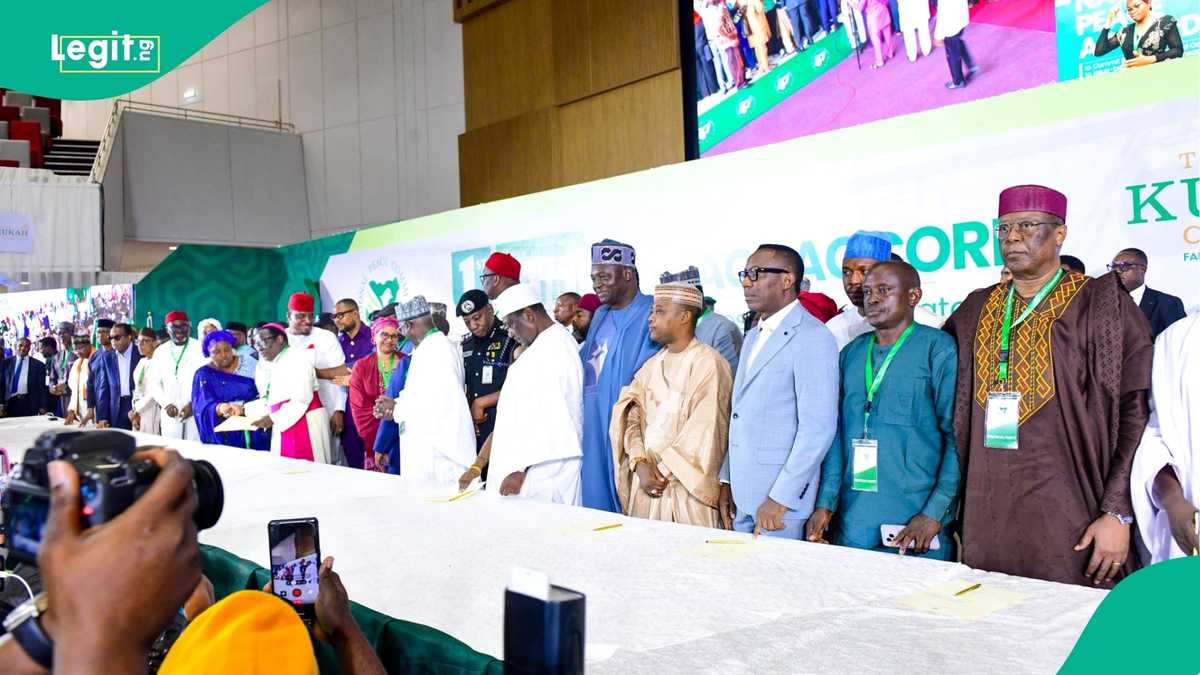
Peter Agada, the Young Progressives Party’s presidential candidate and one of the declared contenders for the 2027 election, has stated plainly that he will not restore Nigeria’s petrol subsidy if he wins power. The declaration puts him at odds with rivals such as Atiku Abubakar, who has made subsidy restoration a centrepiece of his economic pitch, and it signals that the debate over Tinubu’s most consequential first-day decision is far from settled.
Agada made his position public during an appearance on Channels Television’s Politics Today on Friday, where he spoke at length about Nigeria’s revenue shortfalls and the discipline he believes must govern public spending. His tone was measured but unambiguous: the subsidy is gone, and it should stay gone.
President Bola Tinubu removed the petrol subsidy on 29 May 2023, the very day of his inauguration, triggering an immediate surge in fuel prices and a knock-on rise in the cost of goods and transport that millions of Nigerians are still absorbing. The move was bold and, for many households, brutal — yet Agada’s position is that reversing it would solve the wrong problem.
The Revenue Argument
Agada’s case rests not on defending the pain the removal caused, but on redirecting attention to what he sees as the structural rot underneath. Drawing on remarks by Minister of State for Finance Taiwo Oyedele, he questioned how much revenue the federal government actually retains once royalties and crude production costs are deducted. His contention is that the net figure is far too thin to sustain a country of Nigeria’s scale, meaning the subsidy was always consuming money the state could not genuinely afford.
He also turned his attention to the Engineering, Procurement and Construction system, describing it as flawed by design and ripe for reform. In his assessment, waste embedded in that framework bleeds public money before it can reach productive use, and any serious government must confront that before claiming it has fixed the economy.
Atiku Abubakar, running under the African Democratic Congress banner, takes the opposite view, arguing that restoring the subsidy is the most direct route to easing the hardship on ordinary Nigerians. Agada’s counter is that the subsidy was never the source of economic pain — mismanagement of oil revenues was, and that is where the fix must begin.
Spending Discipline as the Centrepiece
Agada was candid in acknowledging that Nigeria faces both a revenue problem and a spending problem, but he was unequivocal about which he considers the graver threat: inefficient and leaky public expenditure. His platform, as he described it, is built on plugging financial leakages and imposing genuine discipline on how government money moves, rather than on reversing a reform that has already been absorbed — however painfully — into the economy.
That position places Agada in a small but notable group of 2027 contenders who believe the subsidy removal, for all the hardship it caused, must be made to work through better governance rather than unwound by the next administration. Whether Nigerian voters, many of whom are still feeling the squeeze at the pump and the market, will find that argument persuasive is the real test ahead.