
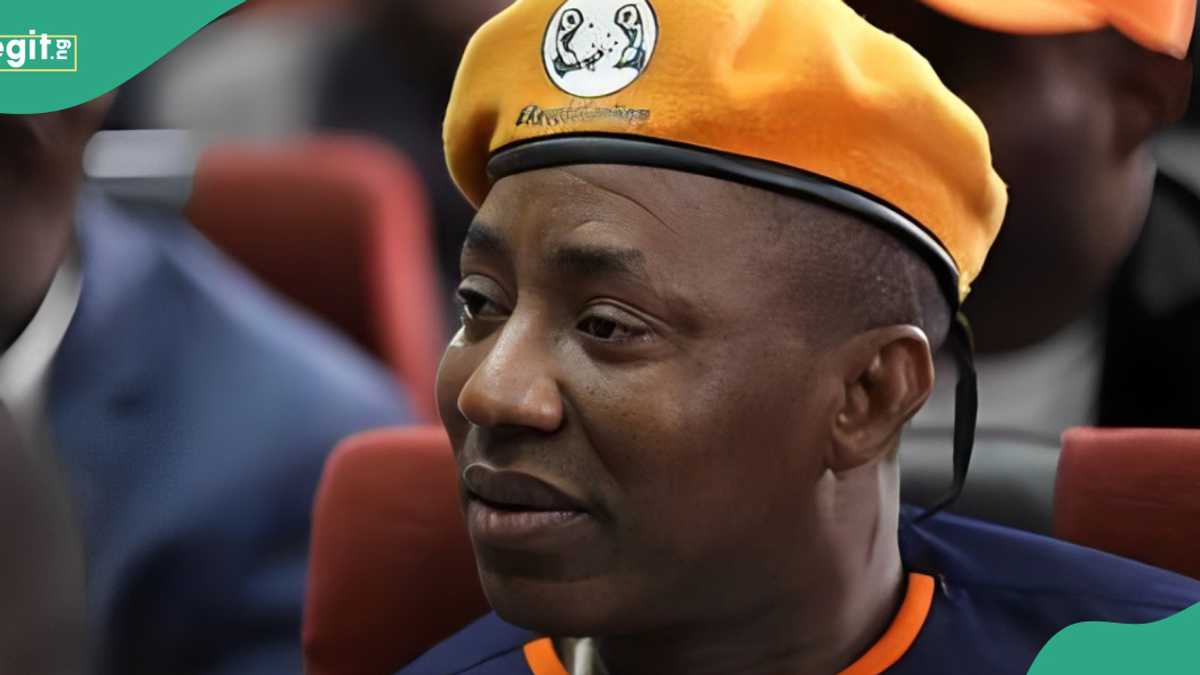
The freedom to criticise a security agency is not the same as the right to do so without consequence — and a civil society group has decided it has heard enough from Omoyele Sowore.
The Centre for Public Integrity (CPI) has issued a sharp public rebuke of the activist and perennial presidential candidate, accusing him of waging an unfair and self-serving campaign against the Department of State Services (DSS). The group’s core argument is straightforward: Sowore is a man who once languished in DSS custody for over four months, had his movement restricted, and was rearrested inside an Abuja courtroom — yet today moves freely across the country, attending events and holding press conferences, apparently without interference. That contrast, the CPI insists, ought to count for something.
In a statement signed by Comrade Job Samuel Danfulani, the CPI drew a direct line between Sowore’s changed circumstances and the leadership of current DSS Director-General Oluwatosin Ajayi, crediting him with steering the agency towards greater professionalism. The group recalled the full weight of what Sowore endured under the Buhari administration following the 2019 #RevolutionNow protests — the prolonged detention despite met bail conditions, the courtroom rearrest, the curtailed movement — and asked, pointedly, why a man enjoying freedoms he was once denied should devote his energy to attacking the institution that now permits them.
Disrespect and destabilisation
The CPI did not stop at irony. It condemned Sowore’s reported description of security operatives as “stupid” and “criminal”, calling the language an affront to personnel who risk their lives in service to the state. The group went further still, alleging that Sowore’s sustained assault on Nigerian security institutions serves the interests of foreign organisations intent on destabilising the country — a serious charge, though one the CPI offered without detailed evidence in its public statement. Whether or not that allegation holds, the underlying concern — that relentless institutional delegitimisation carries real costs for public order — is one that deserves serious engagement rather than reflexive dismissal.
On Sowore’s complaints about detention conditions at Kuje — specifically claims that he was held alongside inmates suffering from tuberculosis — Danfulani was blunt: “Kuje prison is not a hotel. A correctional facility is meant for detention, not luxury.” That response will strike some as callous, given that inhumane detention conditions are a legitimate human rights concern regardless of who is held. But the CPI’s broader point — that Sowore’s grievances have curdled into something closer to a personal vendetta against the state — carries more weight than his supporters may be willing to admit.
The group also took aim at Sowore’s political record, questioning why a man who has repeatedly failed to build broad electoral support continues to position himself as the conscience of the nation, while simultaneously attacking opposition figures such as Peter Obi and Atiku Abubakar. The allegation that the African Action Congress (AAC) functions essentially as Sowore’s personal vehicle rather than a genuine political movement adds another layer to the portrait the CPI is painting: not a principled dissident, but an operator whose institutional attacks serve his own profile more than the public interest.
The CPI closed by calling on Nigerians to support the DSS, the military and the police as they discharge their constitutional mandate. That call is not unreasonable in itself — security institutions deserve public confidence when they earn it. The harder question, which neither the CPI nor Sowore appears eager to engage honestly, is precisely how and when that confidence is earned, and what legitimate dissent is supposed to look like in a country where the line between accountability and destabilisation is drawn by those in power.