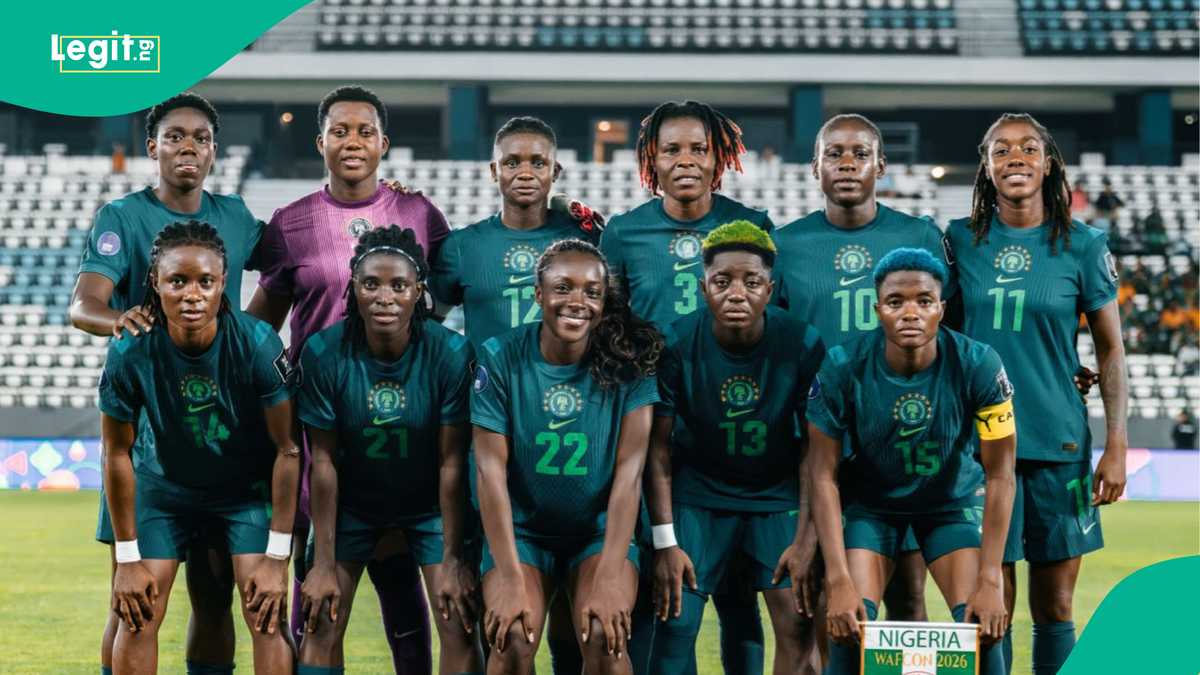
A single first-half strike. That was all it took to end Nigeria’s reign as African champions.
Myriam Nyadjou’s goal for Cameroon on Saturday sent the Super Falcons crashing out of the 2026 Women’s Africa Cup of Nations at the quarter-final stage, delivering a defeat that stings well beyond the scoreline. Nigeria had arrived in Morocco as defending champions, full of expectation and chasing back-to-back continental titles. They left with neither the trophy nor an automatic berth at the 2027 FIFA Women’s World Cup.
A Record That Hurts
The scale of the setback is hard to overstate. Across 14 editions of WAFCON, Nigeria had never once failed to reach the semi-finals. That record is now gone. The Indomitable Lionesses, who advance to the last four and secure World Cup qualification in the process, inflicted a historic first on Nigerian women’s football with a disciplined, composed performance that Nigeria simply could not match.
The 1-0 defeat was not a fluke. Cameroon were organised, clinical and fully deserving of their win. Nigeria, by contrast, lacked the cutting edge that had carried them to the title twelve months earlier.
The Prize Money Picture
The Confederation of African Football significantly raised the financial stakes for this year’s tournament. The overall winner will collect $2 million — double the prize on offer at the 2025 edition. Quarter-finalists, meanwhile, receive $150,000. That is the sum Nigeria takes home from Morocco.
Compare that figure to the $1 million the Super Falcons collected for winning the competition last year and the financial drop-off is stark. A six-figure payout is not nothing, but it represents a fraction of what defending champions might reasonably have expected to earn had they gone the distance.
It would be wrong, though, to reduce this elimination to a matter of prize money. The real losses are harder to quantify — the missed World Cup spot, the broken unbeaten semi-final record and the dent to a programme that had built genuine momentum.
World Cup Qualification Still Possible
Nigeria’s road to the 2027 FIFA Women’s World Cup has not been completely closed off, but it has become considerably more difficult. CAF will send four automatic qualifiers from WAFCON, with two additional African nations able to reach the tournament through the intercontinental playoff route. The Super Falcons will now need to navigate that longer, more precarious path if they are to make it to Brazil.
Whether the team and the Nigeria Football Federation respond with the urgency this situation demands remains to be seen. Nigerian women’s football has too much talent and too much history to be written off. But history, as Saturday proved, does not guarantee anything. The Super Falcons will need to rebuild quickly — and the federation must ensure the structures exist to support them.
One goal. One painful quarter-final exit. The reckoning starts now.