
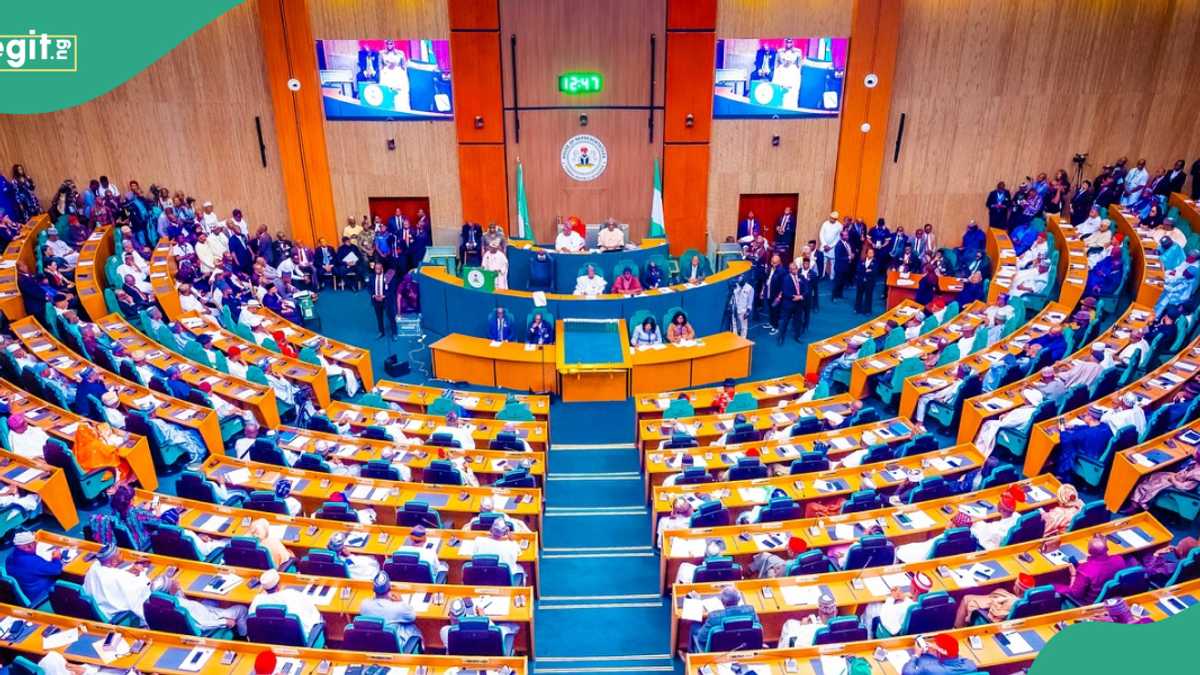
House Turns on the Presidency
A majority of House of Representatives members, including lawmakers from the ruling party, voted on Tuesday, 7 July to compel President Bola Ahmed Tinubu and his economic team to appear before parliament and account for the persistent failure to implement successive appropriation budgets. The motion, sponsored by Hon. Alex Ikwechegh of the Aba North/Aba South Federal Constituency in Abia State, was titled “Urgent need to address the poor funding of appropriated budgets and delayed releases to MDAs as revealed during the 2026 budget defence sessions.” It passed with overwhelming cross-party support, exposing a deepening rift between the legislature and the presidency.
Zero Capital Releases and N1.5 Trillion in Unpaid Debts
Ikwechegh told the House that disclosures made during the 2026 budget defence sessions had revealed alarming funding gaps under the 2025 budget, with some sectors recording zero capital releases across the entire fiscal year. Indigenous contractors had staged protests outside the Federal Ministry of Finance and the National Assembly gates, with many unable to repay bank loans taken out to execute government projects.
“The credibility of the budget rests not only on the size of the figures appropriated, but on the fidelity and timeliness with which appropriation funds are released, cash-backed, and utilised for ministries, departments, and agencies,” Ikwechegh said. The statement is damning precisely because it is simple. Money was approved. Money was not released. Projects did not happen.
He reminded the House that President Tinubu, at a Federal Executive Council meeting on 10 December 2025, had personally directed the immediate settlement of verified contractor liabilities estimated at approximately N1.5 trillion and ordered an inter-ministerial committee to fast-track payments. Legislative approvals for borrowing in excess of N1 trillion to clear outstanding obligations followed. Despite all of that, Ikwechegh said fund releases to Ministries, Departments and Agencies remained virtually nonexistent.
He also raised concern over a Treasury circular dated 29 June 2026, issued by the Office of the Accountant-General of the Federation, which imposed an additional verification requirement from the Federal Ministry of Special Duties before constituency project payments could proceed. Ikwechegh described it as a bureaucratic bottleneck that directly contradicted the President’s own instruction for speed.
Constitutional Grounds for Accountability
Before Ikwechegh moved his motion, Hon. Benedict Etanabene of the Okpe/Sapele/Uvwie Federal Constituency in Delta State raised a constitutional point of order, citing Sections 4, 88 and 89 of the 1999 Constitution to argue that the legislature had a clear duty to demand accountability over budgets it had approved. He called on the House to summon the President and his financial team directly to the chamber.
“We cannot explain to our constituents what is happening. The budgets are not being implemented. Presently, in Nigeria today, we are implementing 2024, 2025 and 2026 budgets running concurrently,” Etanabene said. That single observation captures the scale of the dysfunction. Three annual budgets active at once is not a technicality — it is a governance failure.
Speaker Blocks the Summons
Speaker Tajudeen Abbas intervened to rule the summoning clause out of order, stating flatly that “such action is unparliamentary.” His ruling drew visible frustration from the chamber. Attempts to oppose the broader motion were drowned out by protests from fellow lawmakers, and the House remained tense throughout the session.
Many agitated members are reported to be acutely aware of their political fortunes ahead of the 2027 general elections. Stalled zonal intervention projects leave them with nothing concrete to show constituents, and that political exposure is sharpening the legislature’s appetite for confrontation with the executive.
What Happens Next
The motion has passed, but without the summoning clause, its practical force depends entirely on whether the presidency chooses to engage. Tinubu’s administration has not yet issued a formal response to the House’s demands. The combination of zero capital releases in key sectors, N1.5 trillion in unpaid contractor liabilities, a presidential directive that went unheeded, and three concurrent budgets in operation presents a picture of executive dysfunction that parliament can no longer afford to ignore — and, it appears, no longer intends to.