
A Convenient Argument, or a Fair Point?
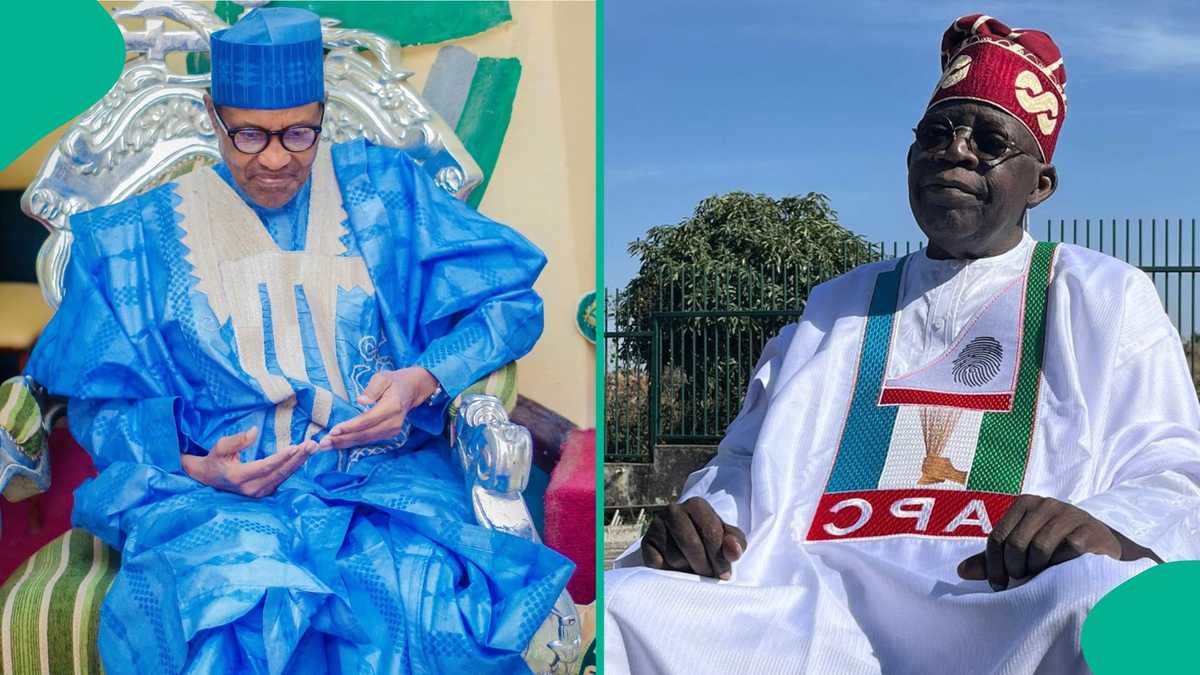
Senator Abdulaziz Yari has made a claim that will irritate many Nigerians but deserves serious examination. His argument is straightforward: if Muhammadu Buhari, a retired Army General with a soldier’s instincts and eight years in office, could not defeat insecurity, it is unreasonable to expect President Bola Tinubu to have done so in far less time. That is not an excuse. It is, at minimum, a provocation worth thinking through honestly.
Yari made the remarks on Monday during a visit to Birnin Kebbi, where he met Governor Nasir Idris, traditional rulers and APC leaders as part of his work as Director-General of the party’s Presidential Campaign Council. The political purpose of the trip was obvious — 2027 groundwork. But the substance of what he said should not be dismissed simply because of the context in which he said it.
The Buhari Benchmark and What It Actually Tells Us
Buhari entered office in 2015 with an explicit mandate to crush Boko Haram and restore order to a country haemorrhaging lives in the north-east. He had military credentials no civilian president could match. He had international goodwill. He had a population desperate for results. And yet, eight years later, banditry had spread across the north-west, kidnapping had become a commercial enterprise, and farmers across the Middle Belt were being killed on their own land.
That record is not a defence of Tinubu. It is a diagnosis of a deeper problem. Insecurity in Nigeria is structural — rooted in poverty, ungoverned territory, porous borders and a police force that remains chronically underfunded and politically compromised. No single administration has seriously dismantled any of those roots. Yari is correct that Buhari failed. He is less forthcoming about why, and whether the current government has any credible plan to do differently.
Yari also urged Nigerians to reflect on their personal responsibilities and, notably, their “relationship with God.” That is the kind of language that sounds pastoral but functions politically — it shifts the burden of a governance failure onto the citizenry. Nigerians should reject that framing without rejecting the broader, legitimate point about structural complexity.
On the Economy, the Evidence Is Thinner
Yari cited falling inflation and reduced fertiliser prices as proof that Tinubu’s economic reforms are working. He compared Nigeria’s hardship to that of the United States and Saudi Arabia, suggesting that economic difficulty is a global condition rather than a policy failure. The comparison is strained. Nigeria’s inflation peaked above 30 per cent in 2024 — a figure that dwarfs the economic pressures faced by either of those countries. Pointing to cash transfers to vulnerable households as evidence of progress is fair, but those transfers remain modest relative to the scale of need.
The honest picture is mixed. The naira has stabilised somewhat after the shock of the 2023 unification of exchange rates. Fuel subsidy removal, painful as it was, freed up fiscal space. But the cost of that adjustment landed squarely on ordinary Nigerians, and the relief measures have not kept pace. Comparing Nigeria’s situation to Saudi Arabia — an oil-rich monarchy with a sovereign wealth fund and a fraction of Nigeria’s population — does not strengthen the government’s case. It weakens it.
What Kebbi’s Backing Actually Signals
Governor Idris welcomed Yari’s delegation with visible enthusiasm, pointing to federal projects delivered in Kebbi State as the basis for the state’s continued support for Tinubu ahead of 2027. That dynamic — federal resources flowing to governors who deliver political loyalty — is as old as Nigerian democracy itself. It tells us little about Tinubu’s national standing and rather more about how the APC intends to build its re-election coalition: state by state, project by project, governor by governor.
Meanwhile, Atiku Abubakar has already begun his counter-offensive, urging Nigerians to collect their permanent voter cards and framing 2027 as a referendum on hunger, insecurity and rising costs. The opposition’s message is emotionally resonant. Whether it is backed by a credible alternative programme remains to be seen.
The deeper implication of Yari’s argument is uncomfortable but important. Nigeria’s insecurity crisis has outlasted multiple administrations, multiple strategies and multiple promises. That suggests the problem will not be solved by changing the man at the top alone — it demands institutional reform that no government has yet been willing to pursue with the seriousness it requires. Yari is right that Buhari failed. The question Nigerians should be pressing is whether anyone in power, now or in 2027, has a real plan to succeed where he did not.