
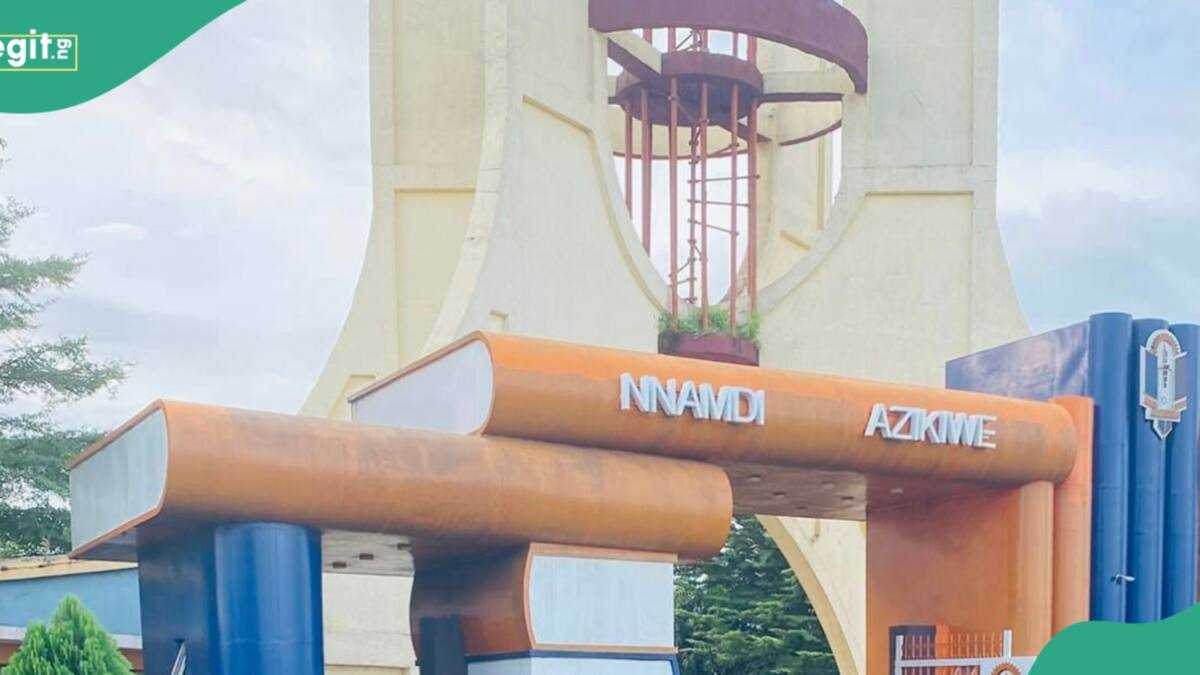
The strike that caught management off guard
On Monday, the Academic Staff Union of Universities (ASUU) chapter at Nnamdi Azikiwe University, Awka (UNIZIK), declared an indefinite strike. The lecturers said their reason was straightforward: they had not received their complete August 2026 salaries and were withdrawing all academic and administrative services until the situation was resolved.
The union directed every member to stop work immediately. In their declaration, they described the outstanding payment as the “sole reason” for the action and alleged it was at least the third time lecturers at the institution had received less than their full entitlement. For students at the Anambra State federal university, that meant no classes and no access to academic services — with no end date in sight.
Management fires back
By Tuesday, UNIZIK’s management had broken its silence. Spokesperson Aloysius Attah told journalists that the lecturers’ characterisation of events was wrong. “No one got half salary,” he said flatly. “Their salaries are intact. It is only their Earned Academic Allowance.”
Attah drew a firm distinction between the monthly salary and the Earned Academic Allowance — a separate payment that, he argued, is an entirely different matter. According to him, full salaries had been paid without issue; it was the allowance that remained outstanding, and for reasons he said were largely outside the university’s control.
He explained that the federal government had originally reached an agreement with ASUU’s national leadership on how the allowance would be funded. The government then shifted responsibility to individual universities, directing them to pay from their own Internally Generated Revenue (IGR) and promising to reimburse them later. For UNIZIK, that arrangement has proved punishing — the university reportedly spends at least N500 million every month to cover the allowance, a figure that has become increasingly difficult to sustain as its revenue position weakens.
A vice-chancellor’s appeal ignored
Attah went further, revealing that UNIZIK’s vice-chancellor had personally met with the lecturers before the strike was declared and asked them for more time to raise the funds. Management, he said, was genuinely surprised when the union pressed ahead with the industrial action despite that appeal.
“The management is trying hard to sustain the payment of the earned allowance to the lecturers every month,” Attah said, framing the university as a willing payer caught in a difficult financial position rather than an institution acting in bad faith.
ASUU-UNIZIK has not publicly responded to management’s account of the vice-chancellor’s meeting, and the two sides remain at an impasse. The strike continues with no resolution announced.
A wider crisis across Nigerian universities
UNIZIK’s dispute does not exist in isolation. Across Nigeria, ASUU has grounded academic activities at more than 20 state-owned universities, following a directive from the union’s national leadership. That broader strike took effect on Tuesday, 26 August 2026, targeting two specific failures: the non-implementation of salary provisions under the 2009 Re-negotiated Agreement, and the refusal by state governments to pay salary arrears owed since January 2026.
The pattern is familiar — a government commitment made, a funding mechanism shifted, and university staff left bearing the consequences. Whether UNIZIK’s management and its lecturers can reach an agreement quickly enough to salvage the academic calendar remains to be seen, but with a nationwide strike running in parallel, the pressure on all parties is mounting.